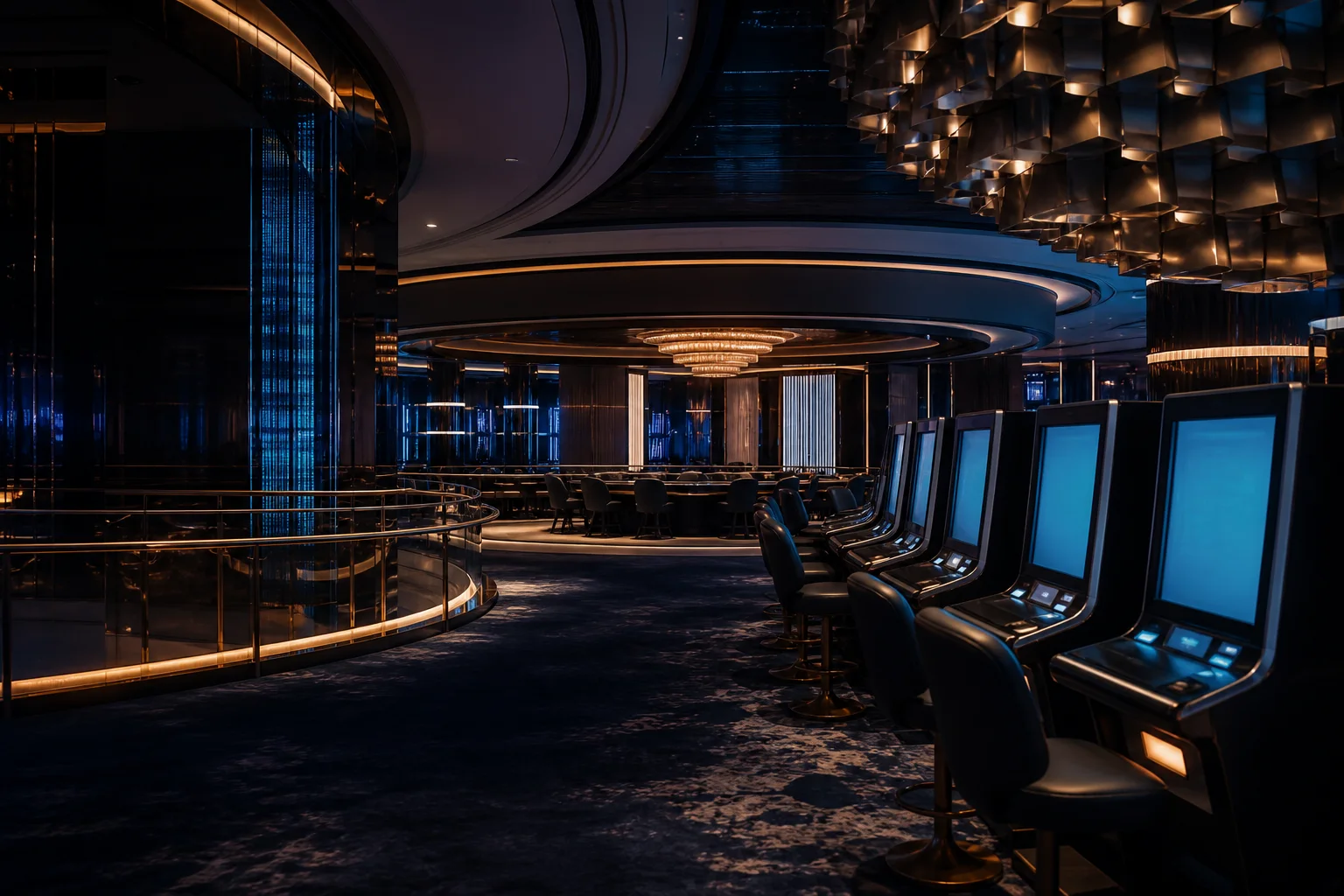
Casino floor design has always balanced discovery with orientation. Operators want visitors to encounter products and venues, but a confusing, noisy or physically difficult environment undermines that goal. The newest equipment formats and system layers are making the balance more technical.
The seven signals below are not aesthetic predictions. They are operating constraints visible in new cabinets, electronic tables, renovation plans and regulatory expectations.
1. Sightlines return as a planning tool
Large portrait cabinets and overhead displays create strong landmarks but can also form visual walls. Designers are using height changes, lower terminal zones and wider openings to preserve views toward exits, table pits, restaurants and service points. Better sightlines support wayfinding, security and the legibility of the broader resort.
2. Electronic tables create intermediate zones
Stadium and individual electronic table terminals occupy a middle ground between slot banks and staffed tables. They can connect to live dealers, automated equipment or approved RNG outcomes. Their layout must communicate the game source, preserve views, manage group sound and accommodate queueing without blocking circulation.
3. Accessibility moves into the first plan
Accessible paths are only the beginning. Reach to controls, chair movement, knee clearance, text size, glare, colour contrast, audio alternatives and consistent interface patterns all affect use. Designing these elements before procurement is less expensive than retrofitting a dense floor after installation.
Design principle
Accessibility is not a special zone. A mixed floor should give people meaningful product choice across categories and locations.
4. Serviceability competes with screen size
A spectacular bank that is difficult to open, cool, clean or repair can lose value through downtime and labour. Operators increasingly inspect access panels, component replacement, cable routing, diagnostic tools and parts support alongside game performance. Technician circulation belongs in the plan even when it is invisible to guests.
5. Infrastructure must support faster change
Content libraries move faster than construction. Flexible power, data, mounting and sign systems let operators replace banks, add table terminals or alter denomination and theme without major demolition. The objective is not constant churn; it is avoiding a floor locked to one format for its full building lifecycle.
6. Acoustic zoning becomes deliberate
Cabinet audio, overhead celebrations, live tables, bars and performance venues can accumulate into an undifferentiated sound field. Directional speakers, absorptive finishes, bank spacing and programme zoning let high-energy areas coexist with quieter play and circulation. Sound also affects staff communication and sensory accessibility.
7. Responsible design joins the brief
Clocks, natural orientation, clear exits, visible support information and spaces where staff can speak privately with a guest can support safer operations. Digital systems may also deliver account, time or limit information where regulation permits. These features do not remove gambling risk, but they can make the environment less opaque.
The floor as an operating portfolio
The strongest layout decisions begin with segments rather than a universal machine count. Premium cabinets can provide landmarks. Core cabinets support depth of content. Video poker may need its own ergonomic and social pattern. Electronic tables provide flexible capacity. Staffed tables require surveillance, dealer support and clear pit circulation.
| Design layer | Guest outcome | Operating outcome |
|---|---|---|
| Sightlines | Clearer orientation | Improved supervision and venue visibility |
| Spacing | Comfort and choice | Service access and flexible banks |
| Acoustics | Distinct energy zones | Better staff communication |
| Infrastructure | Fresh product mix | Lower change cost |
| Accessibility | Broader usable choice | Reduced retrofit and compliance risk |
The floor of 2026 is less a fixed collection of machines than a regulated, serviced and continuously adjusted operating environment.
None of these signals eliminates the need for performance data. They broaden what performance means. Revenue per unit is important, but uptime, energy, maintenance, circulation, staffing, accessibility and the effect on adjacent resort spending all belong in the evaluation.
Method note
This analysis synthesizes published cabinet and electronic-table specifications, regulator technical frameworks and common resort operating requirements. Examples are descriptive and do not endorse a manufacturer or gambling product.